19.72°C Kathmandu
Nepalis making treacherous trip to Europe through the Balkan route
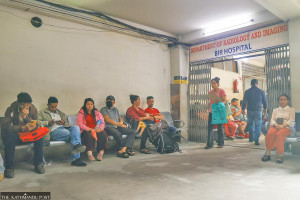
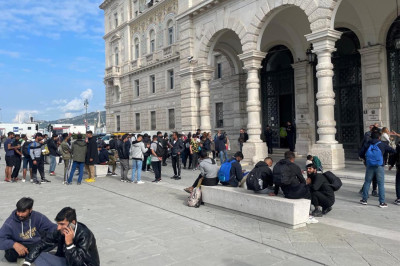
More than a hundred Nepalis are currently stranded in Trieste on the Italian-Slovenian border. This migration process has become almost routine.
More than a hundred Nepalis are currently stranded in Trieste on the Italian-Slovenian border. This migration process has become almost routine.
Government announces zero-cost migration measures, remittance investment schemes, rescue support for stranded workers and programmes for returnee migrants.
Embassy in Bangkok urges undocumented Nepalis in Cambodia to return home immediately.
Nepal’s Department of Foreign Employment has called for applications for caregivers at long-term care centres in Israel, with 60 percent of the quota reserved for women.
Business groups and BFIs have opposed the government’s plan to channel corporate social responsibility funds into a central state-run mechanism, arguing that the money should continue to be spent directly on local communities.
Study by London-based rights group finds workers toiling up to 14 hours in over 50 degrees heat.
Workers say a Qatari company has withheld salaries and benefits for eight months, leaving them unable to return home as unpaid dues cross Rs20.5 million.
Labour Ministry says 1,153 applicants excluded from Israel caregiver selection cannot be sent and must join future recruitment rounds.
Embassy says 36 listed health facilities are approved to carry out medical tests and collect additional service fees under bilateral labour agreement.
Poor oversight by education and labour authorities enabled illegal overseas recruitment through consultancies.
Authorities say traffickers are increasingly using Thailand as a transit point by exploiting tourist visas.
Labour department is preparing a new vacancy notice after delays caused by elections and regional tensions.
The collapse of Neom’s ambitions is costing Nepali labourers more than jobs — it is upending lives built around remittances that may not return.
Embassy moves to repatriate 277 individuals as victims recount coercion, abuse and trafficking networks.
Fewer than 0.5 percent of Romanian recruitment companies would qualify under new law, writes Romanian analyst.